
“We don’t rise to the level of our expectations, we default to the level of our training.” — Archilochus
In part 1, we explored how you can successfully facilitate reinvention through:
- Identifying and amplifying strengths
- FOCUS on goals
- Avoiding Confirmation Bias
In this post, let’s delve further:
4. Measuring the right metrics
“You can’t manage what you can’t measure“.
Establishing the right, relative metrics in reinvention will ensure measurable action and avoidance of confirmation bias or vanity measures.
The type of metrics deployed is dependent upon your course of action and should align to your goals.
Whether you’re trying to start a business or idea from scratch, or make incremental changes to your career here are some metrics to consider:
Dave McClure’s Pirate Metrics (AARRR):
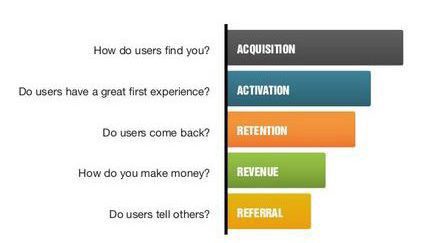
Pirate Metrics are aligned to marketing funnels and can be used when testing or launching new products/ideas.
For example I’m working on acquisition, activation and retention since the beginning of Reintention a month ago. Acquisition is my main focus because I’m trying to increase traffic and build awareness. At each stage consider:
- A — do you have a viable problem?
- A — are the features and solution are people are looking for?
- R — do people come back?
- R — would people want to pay for your product/service/idea?
- R — would you be brought up through water-cooler conversations or have a positive NPS?
This diagram shows the AARRR ecosystem a explores different components within your funnel.
For other goals you might want to measure:
- Learning: Learning compounds. What can you take away and start-stop-do more-do less next time? What can you knowledge share with others? What did you identify within yourself that you may not have recognised previously?
Malcolm Gladwell said it takes 10,000 hours (417 days) of practiced learning to master a domain or skill. Fortunately with modern meta/accelerated learning methods such as Tim Ferriss’ DiSSS CaFE you can master learning at an faster rate. Phew!
- Cost/value ratio: Just pay $1,500 for a coding course? What were you able to do with it afterwards? What did you do afterwards? A key point here is that the cost/value may not be realised for some time. Learning Chinese Mandarin might not yield six-figures in 3 months, but what did you gain? This could be quantitative or qualitative. Sometimes value comes in the most unexpected forms.
- Rate of success: Similarly to cost/value the rate of success may take time to realise. A good indicator is whether you achieved the goals set out or the degree in which you did. Similarly to agile methodology, when is your definition of done?
If your failed or didn’t finish prior, were you able to succeed now? Faster? Cheaper? How were the results different or better? If you did fail, what did you learn?
This last one may seem a bit fluffy, but, how did you feel? A strong indicator of success performance is the level of enjoyment and happiness. So bring on those dopamine feels!

5. Discipline of desire
The discipline of desire is engagement. The desire to create value and management of fear is key to reinvention action.
- Intrinsic motivations: are internal drivers, stemming from meaningfulness or purpose of what you do. Irrespective of reward or compensation you enjoy and gain satisfaction and fulfilment from the task itself. Intrinsic motivators are the reasons you get out of bed early with a “get stuff done” mentality and have the grit to overcome adversity. Think of these as pull motivators.
This differs from extrinsic motivations which are derived from outside you; external factors such as reward, recognition, ego driven attribution or because of what others want or think. These are push motivators.
Plenty of research shows intrinsic motivators long withstand extrinsic motivators when it comes to success, whether in sports, education or the workplace.
Explore what gives a spring in your step and exploit it. The family member of a friend once advised them to “ensure you have balance with life” upon them working weekends. For him it “wasn’t work, but creating”.
Knowing your purpose and reasons for being, renders creation as more than work, but life. Creation is engaging, energy giving and rewarding.
- Feeling incentivised: People lose the spark of desire or traction not only because of losing sight of ‘why’ but also because of lack of incentives.
Whether a carrot or a stick, find what gives you a sense of reward and use it to keep accountability. One way may be to be socially accountable to a friend, colleague or mentor.
Start small and build up. Beginning at the top with blanket statement “world changing” or monstrous goals will result to not much. Incentives closely relate to the tracking and review of goals from point 2.

6. Balance creation vs consumption
Forging your reinvention is a culmination of consumption and creation. EO Fire founder John Lee Dumas emphasised the importance taking content and insights from journeys of others but creating your own path.
Heavy focus on either one alone is not going to yield positive results. Consumption and creation work in hand with each another.
- Start taking 80:20 from your consumption: highlight the top 20% that yields 80% of the greatest value. Find ways to implement it into your life. Even if there’s only 1 thing you take away from something, implementing is far more beneficial. You also are more likely to retain that learning.
- Test different consumption vs creation ratios: Reading 30 books a year and listening 1000+ hours of podcasts, keynotes and Ted Talks may be good intent, but will not amount to anything otherwise if not acted upon.
In 2016, I read nothing short of 20 non-fiction books, and while I did take a lot out of them, knowledge ≠ wisdom. Instead this year, I might read less, but will focus on creating more (min. goal 1 blog post a week, be more active in groups, network etc…) which will move me much farther in reinventing myself.
For a long time my eagerness to learn and consume stemmed from 2 reasons:
1. I felt that my knowledge was inept and I couldn’t do anything to start reinventing and,
2. Consuming was masked as ‘busyness’ and action.
Both are untrue. As Socrates said “I know that I know nothing”. Learning is a process and complementary to action.
Secondly we fool ourselves by thinking that busyness creates value. Though not mutually exclusive, productive, specific action creates value.
Reintention rehash:
- Do you have metrics to measure, track and learn from your goals?
- What motivations do you have to reinvent? Are they intrinsic or transient?
- What incentives keep you going, if you don’t have any can you create more?
- How much are you consuming vs creating? Can you test ways where this is more balanced?


